
Built for female runners. Hormones, thyroid and cycle performance in one test.
Most performance issues in female runners aren't training problems. They're hormone problems, thyroid problems, or iron problems. RunHer tests the markers that show you exactly what's affecting your running.

Pick the panel that fits your running. Your pathology form and collection details land in your inbox straight away.


Walk into any of 4,000+ collection centres across Australia. One quick blood draw and you're done.

Most results land in your private dashboard within 10 days, clearly explained and charted against optimal ranges. Then your Superrun report scores each body system and rates every marker against our Superrun zones.
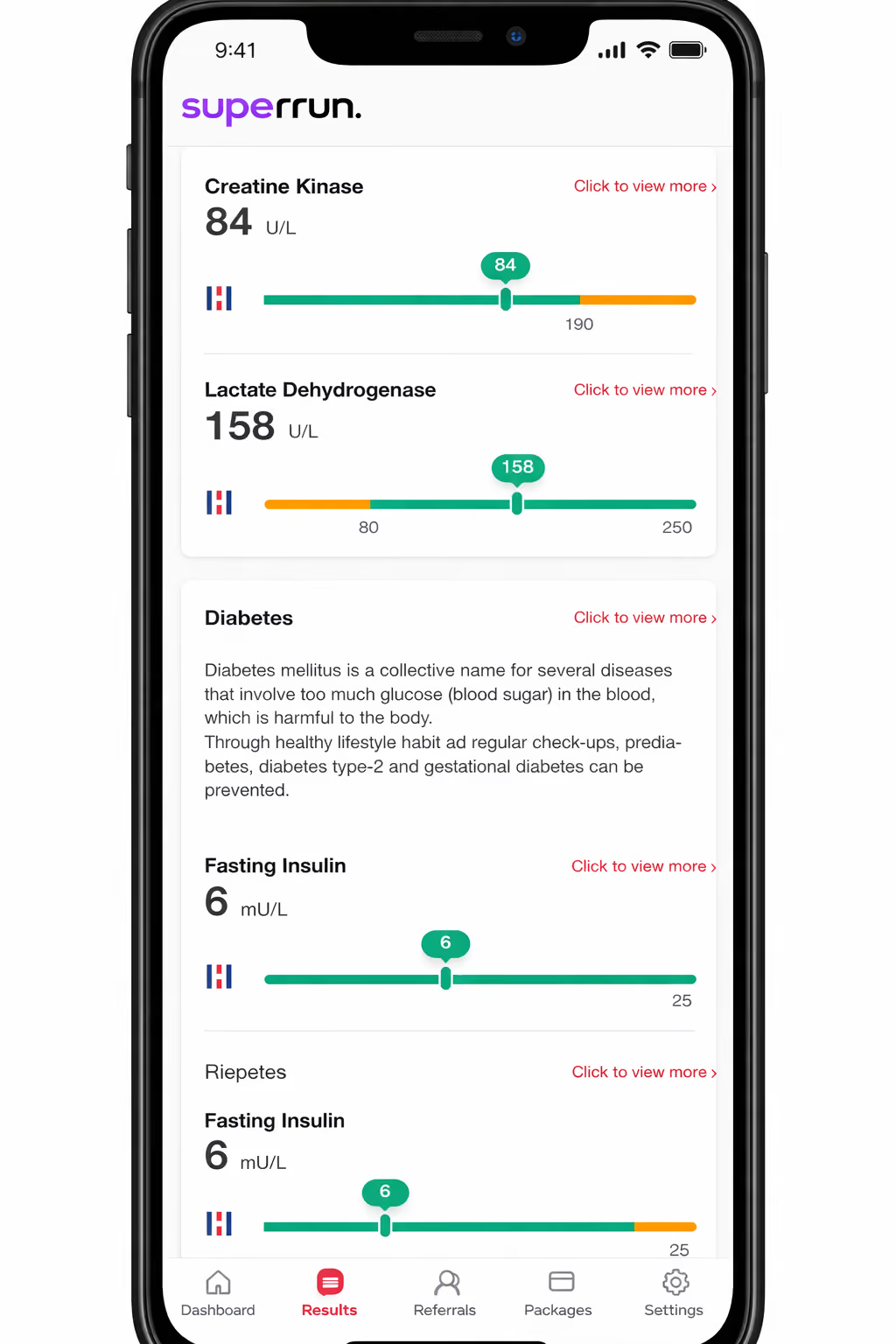

Track the biomarkers that matter most for runners and get clear, useful guidance.

4,000+ collection centres Australia-wide. No GP referral needed.

Every body system scored out of 100 and every marker rated against Superrun zones, so you know what to work on.
See the biomarkers that drive your energy, recovery, and performance - all in one simple test.







Yes. RunHer is just as valuable for proactive testing as it is for troubleshooting. Many female runners discover hormone or thyroid imbalances they didn't know existed - catching them early means you can act before they affect your training.
A standard blood test checks for disease. RunHer checks for performance. It includes a full female hormone profile, thyroid panel, iron studies, and cycle-relevant markers interpreted specifically for active women - not just general medical ranges.
No GP referral is required. We’ll email the referral to you once your booking is confirmed.
Most collection centres accept walk-ins. Some may require a booking - check details when you click on your chosen location.
If your test needs fasting, we’ll include that in your instructions after you order. Fasting usually means no food for 8–12 hours, but water is fine.
Only your pathology referral form. Check your inbox; we email it to you so it’s always handy on your phone.
It depends on your health and running goals. Most people benefit from testing every 3–6 months.